
A stone does not have to be large to cause a problem. A gallstone may sit quietly inside the gallbladder, yet a stone that lodges in a narrow drainage route can trigger a painful attack. The important question is whether bile can still move through the pathway.
Watch the 49-second explanation
What the gallbladder normally does
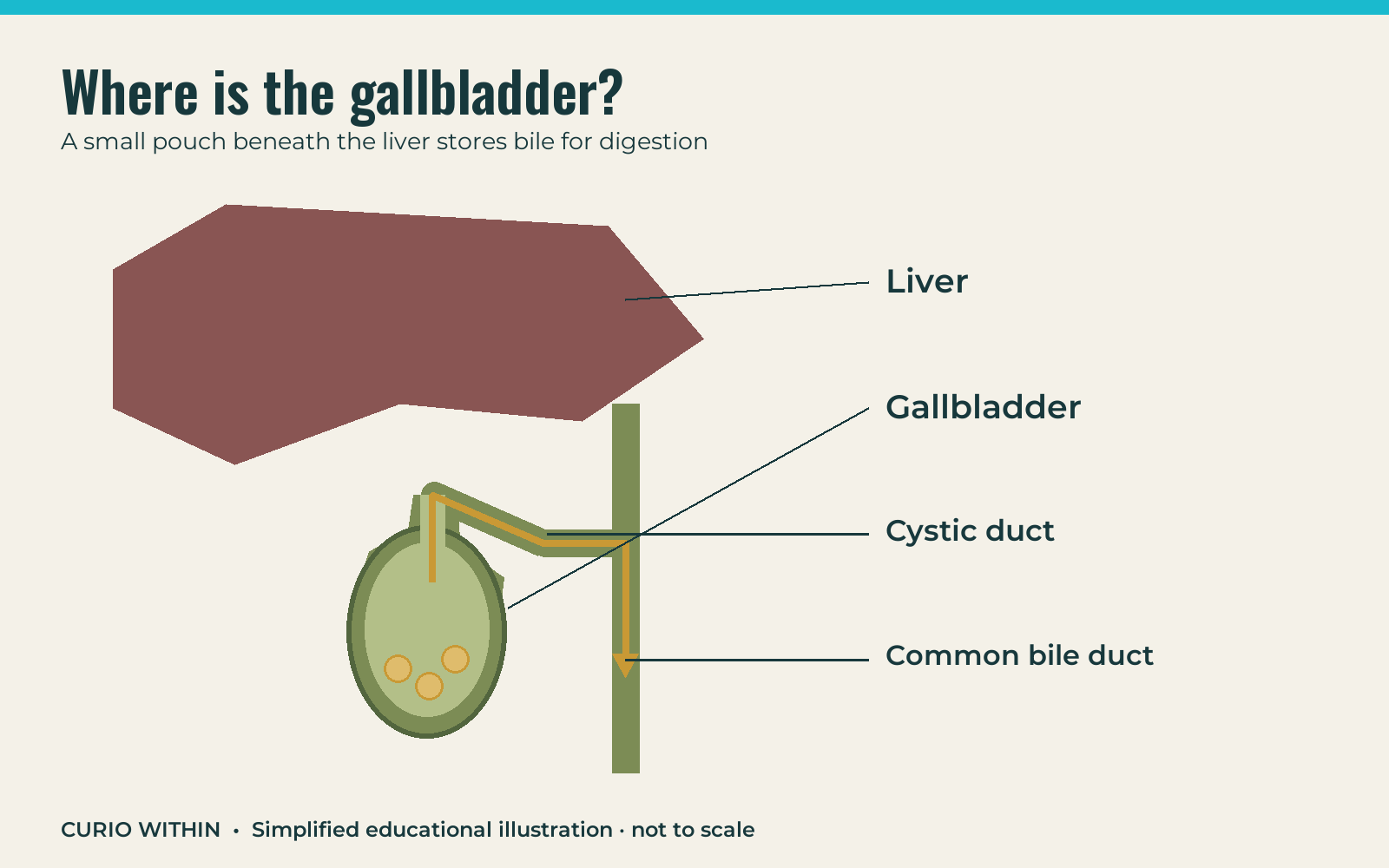
Your liver makes bile, a fluid involved in digesting fats. The gallbladder is the small pouch beneath the liver in the upper right abdomen. It stores bile until it is needed. The cystic duct connects the gallbladder to the wider bile-duct system, which carries bile toward the small intestine. The gallbladder stores this fluid; it does not make it. NIDDK explains this pathway.
Why a blocked outlet can hurt
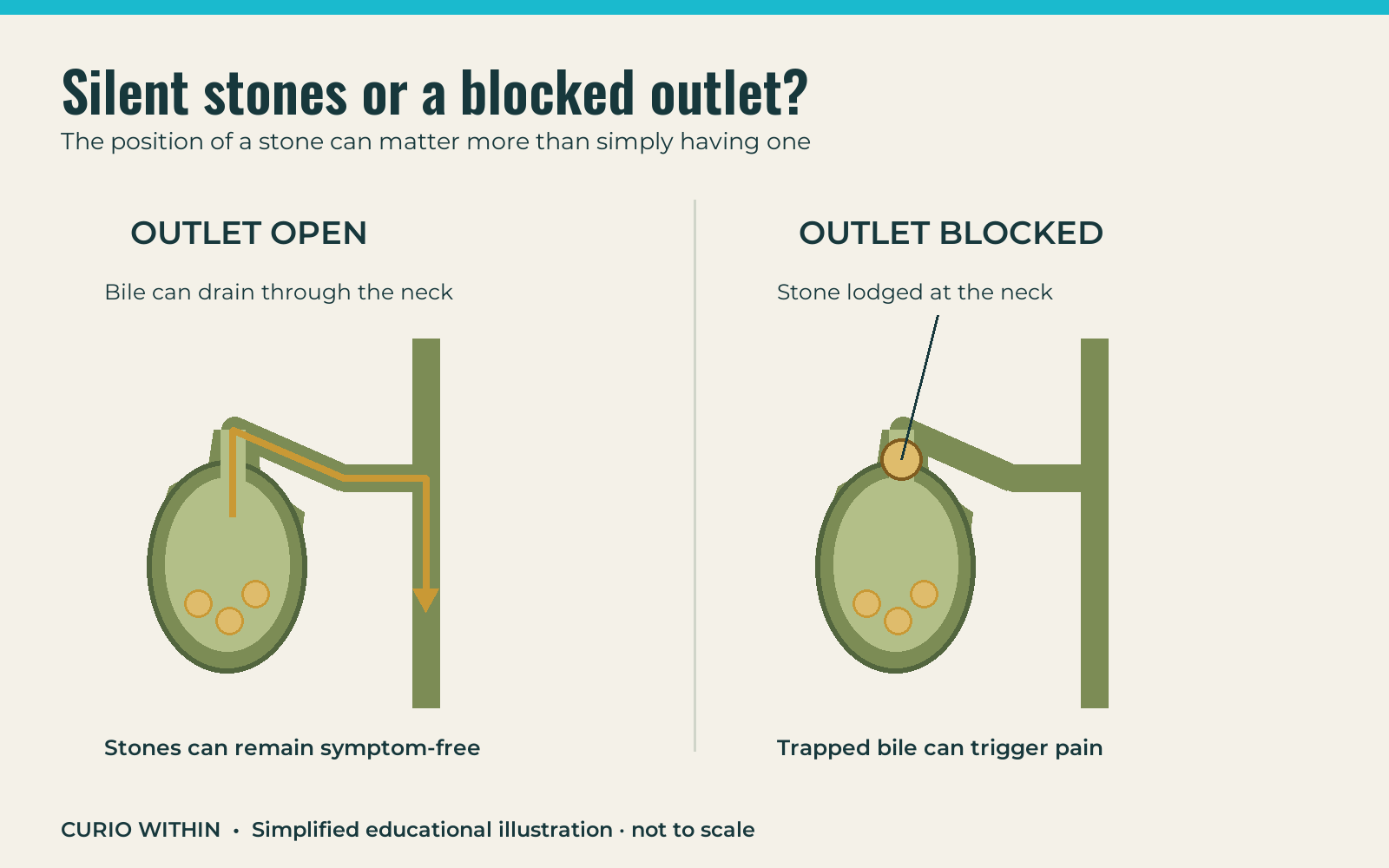
Think of the gallbladder as a pouch with a narrow exit. When a stone obstructs that exit, bile cannot drain normally as the pouch squeezes. Bile can build up, and the resulting attack can cause intense pain. This is a useful simplified model of the mechanism, rather than a prediction of exactly what a particular person will feel.
Gallbladder attacks often involve the upper right abdomen and can last for hours. They may follow a heavy meal. An attack may settle when a stone moves and stops blocking drainage, but that does not establish that the underlying problem has disappeared. Read NIDDK’s symptoms and causes guide.
Why some stones cause no symptoms
Many gallstones do not obstruct bile flow and cause no symptoms. These are often called silent gallstones. A scan for another reason may discover them. Cholesterol and pigment stones are the main types; pigment stones contain bilirubin. The animation compresses stone formation into seconds to make it visible—it does not show the real timescale. Source: NIDDK definition and facts.
Warning signs deserve prompt attention
Sudden severe abdominal pain, fever or chills, or yellow skin or eyes needs urgent medical assessment. Pain spreading to the back with vomiting is another warning sign. Seek emergency care for sudden severe symptoms; do not wait for an online explanation to confirm a cause. The NHS also advises urgent assessment for abdominal pain lasting more than 30 minutes. Use the appropriate urgent or emergency service where you live. Source: NHS gallstones guidance.
How clinicians check for gallstones
Pain alone cannot confirm gallstones. A clinician considers the history, examines the abdomen and may arrange blood tests and imaging. Ultrasound uses sound waves to make images and is a key test for finding gallstones. Other tests may be needed depending on the suspected location or complications. An incidental stone also does not automatically explain every episode of abdominal discomfort. NIDDK describes the diagnostic process.
Does everyone need treatment?
No. Symptom-free stones may not need treatment, whereas painful stones, complications or stones in the common bile duct may require it. Gallbladder removal is the main treatment when needed; a duct stone may need a procedure to clear it. A clinician should explain the options for the actual findings. See NHS treatment information.
The takeaway: a stone can be silent until its position interferes with drainage. Understanding the pathway explains the pain mechanism, but assessment is what establishes the cause.
Written by Curio Within. Sources checked 28 October 2026. Educational information only; not individual medical advice. No independent clinical review is claimed. Editorial policy · Report a correction.
Keep your curiosity going
Why Asthma Makes Breathing Hard: Inside a Narrowing Airway
See how tight airway muscles, swelling and extra mucus can make breathing harder during asthma, and learn when symptoms need emergency care.
Read the story →
What Actually Happens Inside Your Brain During a Stroke?
One blocked artery can disrupt a brain network. Follow the chain from blood flow to neurons, then learn why possible stroke signs need emergency care.
Read the story →