
Asthma can feel like tightness across the chest, but the important changes happen inside the airways. These branching tubes carry air through the lungs. When the available passage becomes smaller, moving air through it takes more effort—often especially when breathing out.
Our short film follows three changes that can contribute: tightening airway muscles, swelling of the lining and extra mucus. The illustrations separate the airway, tissue and ciliary scales so that the mechanism is easier to see. They are educational models, not a patient's scan or a way to diagnose someone's symptoms.
Watch: Inside an asthma flare
A 42.4-second Curio Within film. Anatomy and airflow are simplified educational illustrations.
An airway is a passage for air
The trachea divides into bronchi, which branch into smaller airways. A bronchiole is one of those small passages. The short film moves from the lung organs to a local airway cutaway; it does not imply that the entire lung suddenly closes.
Asthma is a long-term condition in which airways can become inflamed and narrow at times. Its symptoms can vary, and triggers differ between people. The opening may become harder to move air through during a flare, even though the outside of the lung is not visibly changing in the same way. NHLBI: What is asthma?
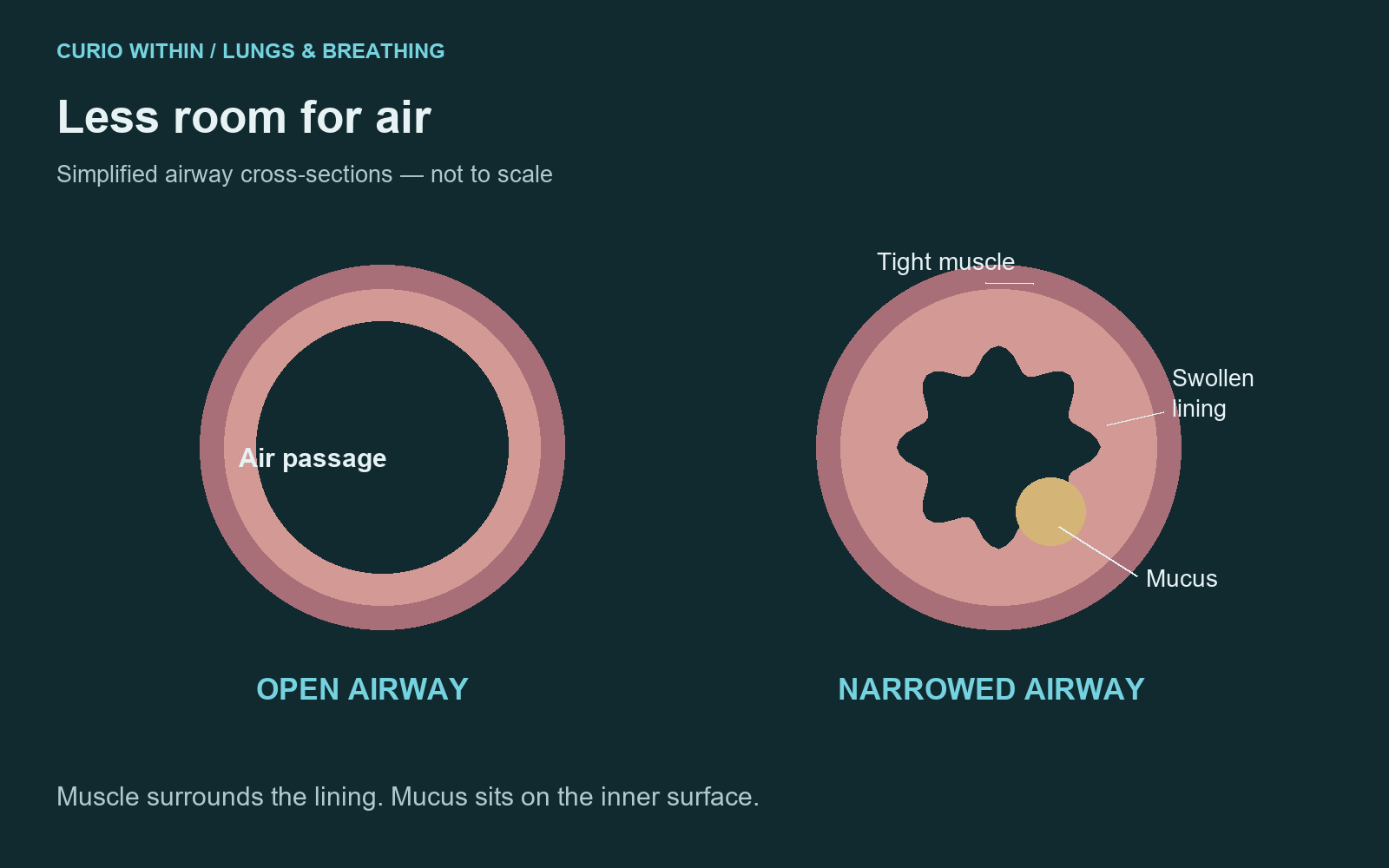
Diagram 1. A schematic comparison, not a scale drawing. The muscle layer is outside the airway lining; mucus occupies part of the inner passage.
Three changes can leave less room
Muscle tightening. Smooth muscle surrounds the airway. When it contracts, the opening can become narrower. The film uses a cross-section to show the wall folding inward rather than an unrelated external object squeezing the lung.
A swollen lining. Inflammation and edema can thicken the tissues lining the airway. That leaves less room inside. This is a tissue change, which is why the animation switches to an enlarged local detail rather than putting giant immune cells beside a whole lung.
More mucus. Extra mucus can occupy additional space in the passage. It is shown as an attached viscous layer, not blood, gemstones or an entire lung filling with liquid. These changes interact; they are not necessarily three events that occur in a fixed order for every person. AAAAI: Introduction to asthma
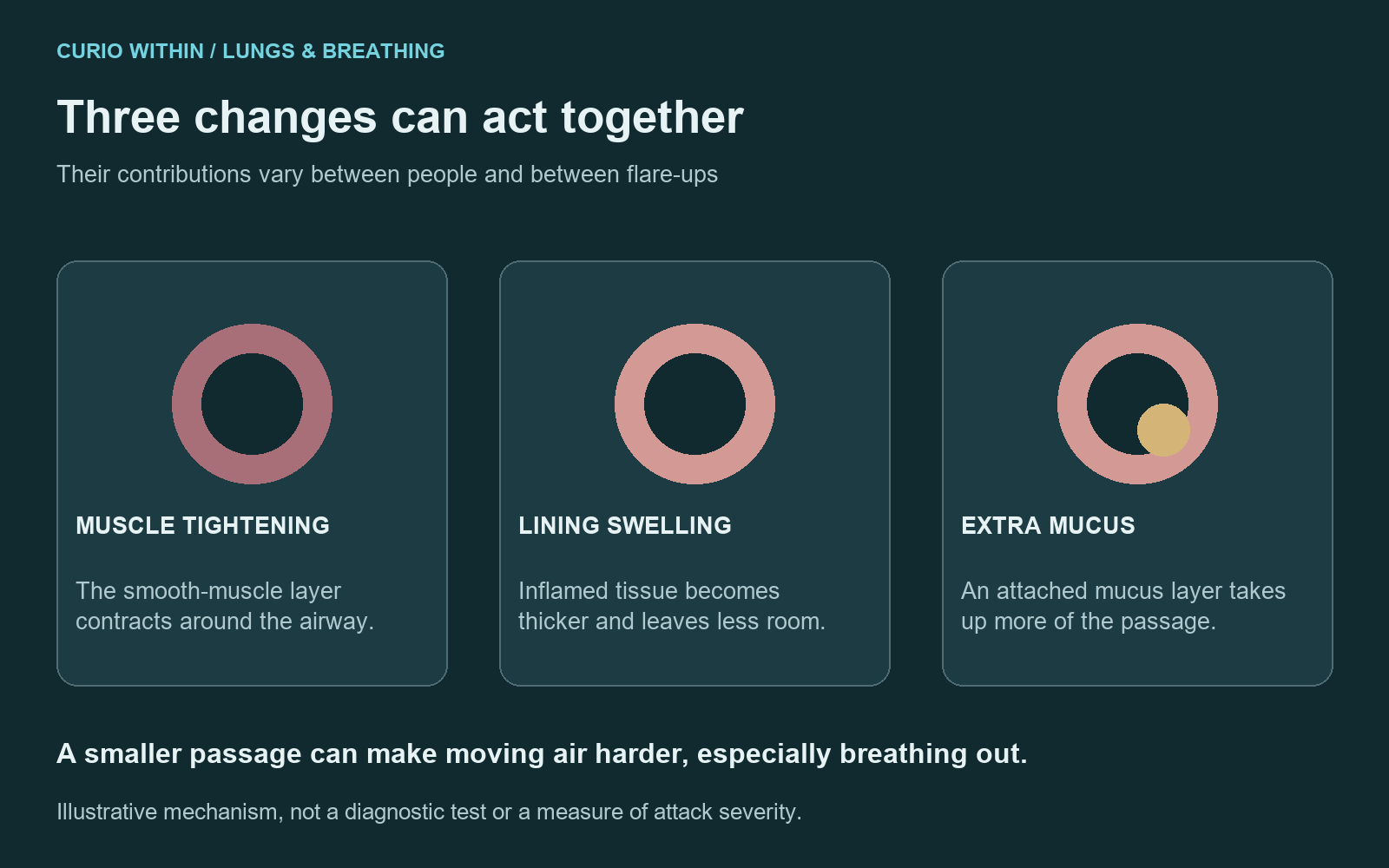
Diagram 2. Different contributions can act together. The amount of each varies, and the illustration does not measure the severity of a person's asthma.
Why symptoms can include wheezing and breathlessness
A smaller air passage makes airflow more difficult. Asthma can cause wheezing, coughing, chest tightness and breathlessness. Symptoms may change over time or with exposures such as allergens, irritants, infections, exercise or cold air. The relevant triggers are individual; the animation does not assume that every flare is an allergic reaction.
Airway inflammation, swelling, constriction and mucus are part of the physiological response described in clinical guidance. The faint airflow wisps in the film are a visual aid, not literal particles visible inside the airway. CDC: Information for clinicians
Medicines can target different parts of the problem
Some reliever medicines help relax tight airway muscles and open the passage. Anti-inflammatory medicines address inflammation. A prescribed inhaler may contain more than one type of medicine, so “reliever” and “anti-inflammatory” should not be treated as mutually exclusive labels for every device.
Treatment depends on the person's age, symptoms and response. Correct inhaler technique and an individualized asthma action plan matter. Do not change a treatment or dose because an animation appears to show an airway reopening. The final tissue shot compresses the idea of inflammation control over time; it does not promise that swelling or mucus disappears instantly. NHLBI: Treatment and action plan
Know when to get help
An asthma action plan should explain what to do when symptoms worsen and when to seek urgent help. Severe breathlessness, difficulty speaking, or a reliever that is not helping are reasons to seek emergency care. Use the emergency number for your location. Do not wait until every possible symptom appears or assume that the absence of a loud wheeze makes a serious attack safe. NHLBI: Asthma attacks
Follow the instructions in your prescribed action plan while getting help. Emergency advice can depend on the inhaler regimen, so this article does not provide a universal puff count or substitute a generic dose for your clinician's plan. NHS: Asthma
The useful takeaway
Asthma involves the space inside the airway: muscle, tissue swelling and mucus can all influence how much room air has to move. Understanding those different targets helps explain why treatment and a clear action plan belong together.
For general education, not individualized medical advice. Illustrations are simplified. Sources checked 29 October 2026. No claim of clinician review.
Keep your curiosity going
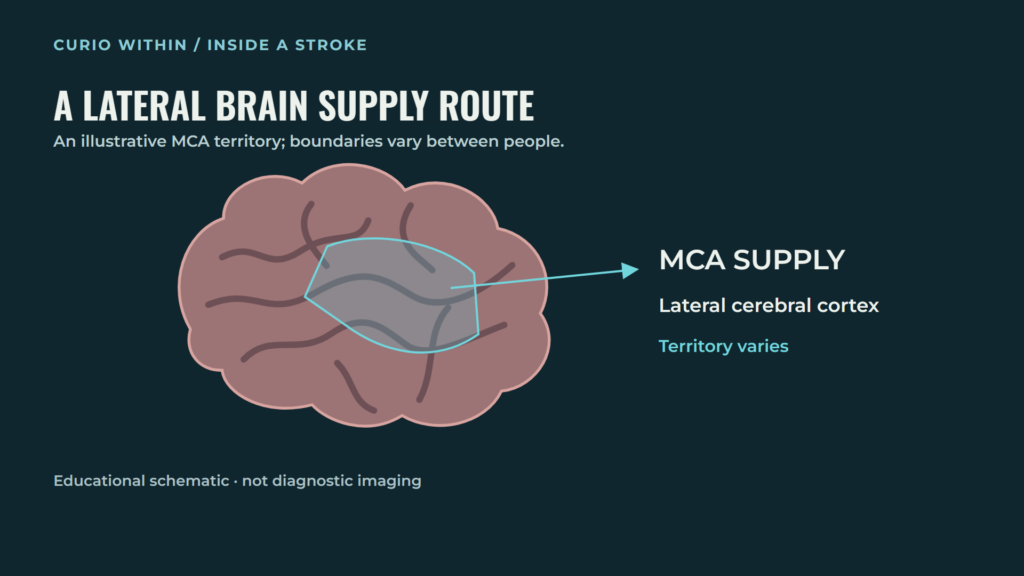
What Actually Happens Inside Your Brain During a Stroke?
One blocked artery can disrupt a brain network. Follow the chain from blood flow to neurons, then learn why possible stroke signs need emergency care.
Read the story →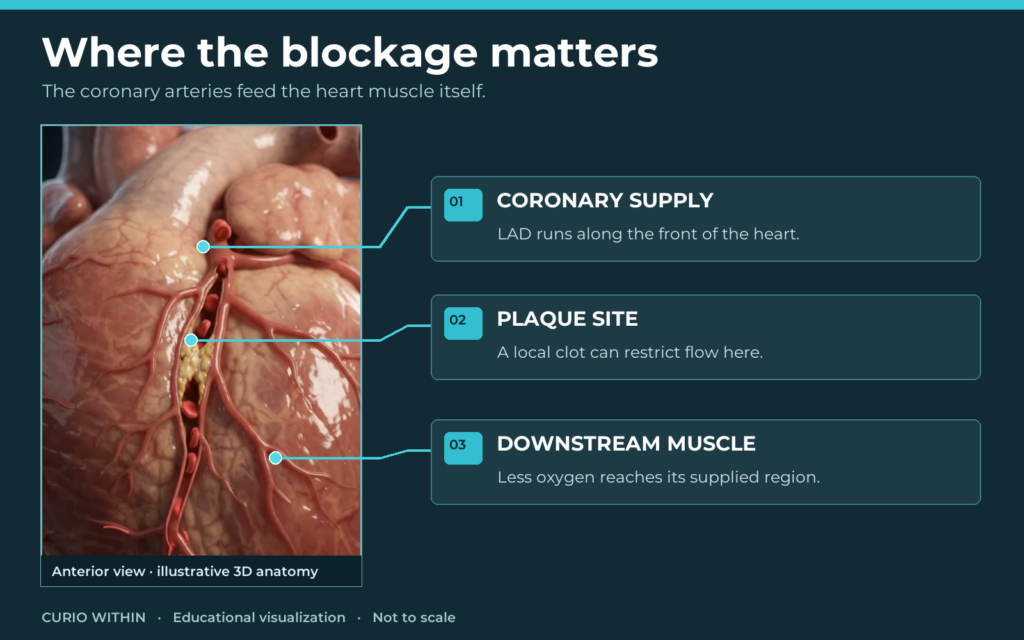
What Actually Happens Inside Your Heart During a Heart Attack?
The heart can keep beating while a blocked coronary artery deprives part of its muscle of oxygen. Follow the chain from artery to cell.
Read the story →