
A tooth can look almost normal from the outside and still hurt. A small opening does not show everything happening beneath the surface. To understand why a cavity can cause a sharp toothache, it helps to follow the layers from the hard outer crown towards the living tissue in the centre. Pain is a reason to get checked, but the absence of pain is not proof that a tooth is healthy.
Watch the 49-second explanation
Decay begins with plaque, bacteria and acid
Dental plaque contains bacteria that can use sugars and starches from food to produce acids. Repeated exposure can remove minerals from enamel, the hard covering of the crown. Saliva helps clear acids and supports mineral replacement. When mineral loss outweighs repair over time, the surface can weaken and break down. The process is gradual; the film compresses its explanation into seconds rather than showing a cavity forming instantly. Source: NIDCR tooth-decay information.
A cavity is a hole caused by lost tooth structure. It is one possible source of tooth pain, but not the only one. Cracks, problems with fillings and other dental conditions can also cause symptoms. A short animation cannot identify the cause of an individual toothache. Source: American Association of Endodontists.
Enamel, dentin and pulp do different jobs
Enamel is the hard protective layer over the crown. Beneath it is dentin, which contains microscopic tubules. The pulp is soft tissue in the centre, containing nerves, blood vessels and connective tissue. The visible crown is therefore not a solid block of identical material: its outer protection and its inner living tissues have different properties. The root surface also has a covering called cementum. Source: American Dental Association tooth anatomy.
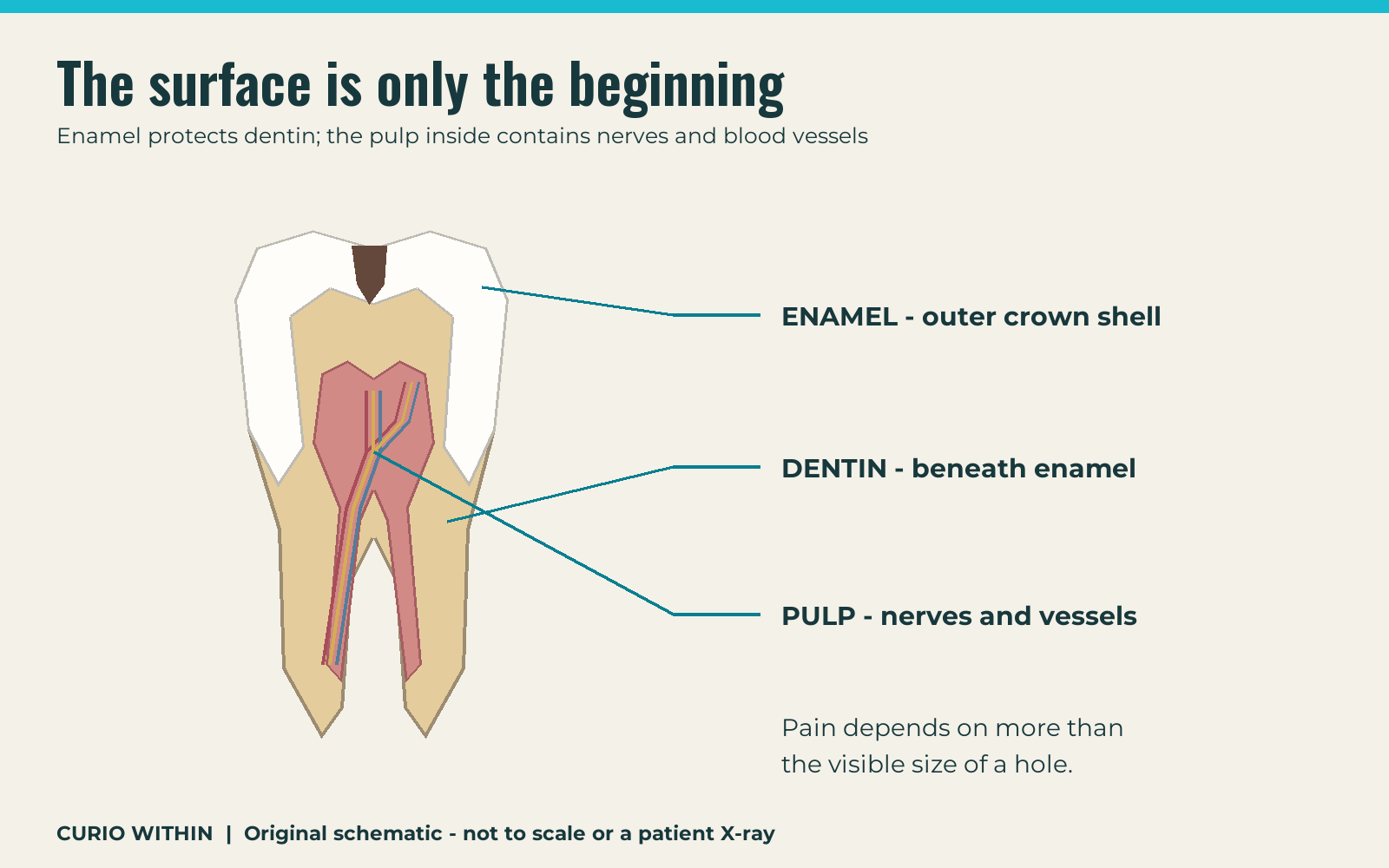
When dentin loses its protective covering, its tubules can allow temperature or other stimuli to affect the sensitive tissues inside. This helps explain why cold, hot or sweet food can provoke sensitivity. The tubules are tiny channels, not large pipes or blood vessels; the microscopic footage enlarges them for visibility. Source: ADA explanation of dentin sensitivity.
Why deeper decay can hurt more
As a cavity becomes larger and moves closer to the sensitive centre of the tooth, pain and sensitivity can develop. Infection may also occur. The important distinction is depth and tissue involvement, rather than simply how wide a dark mark looks from the outside. An examination is needed to establish what the visible surface actually represents. Source: CDC cavities overview.
Inflammation or damage involving the pulp can cause persistent or severe pain. However, the pattern of discomfort alone does not tell you exactly which treatment is needed. The AAE lists several possible explanations for sensitivity and pain when biting, including decay, cracks and filling problems. Persistent symptoms need professional assessment rather than a diagnosis based on a video. Source: AAE tooth-pain guidance.
Early decay can be silent
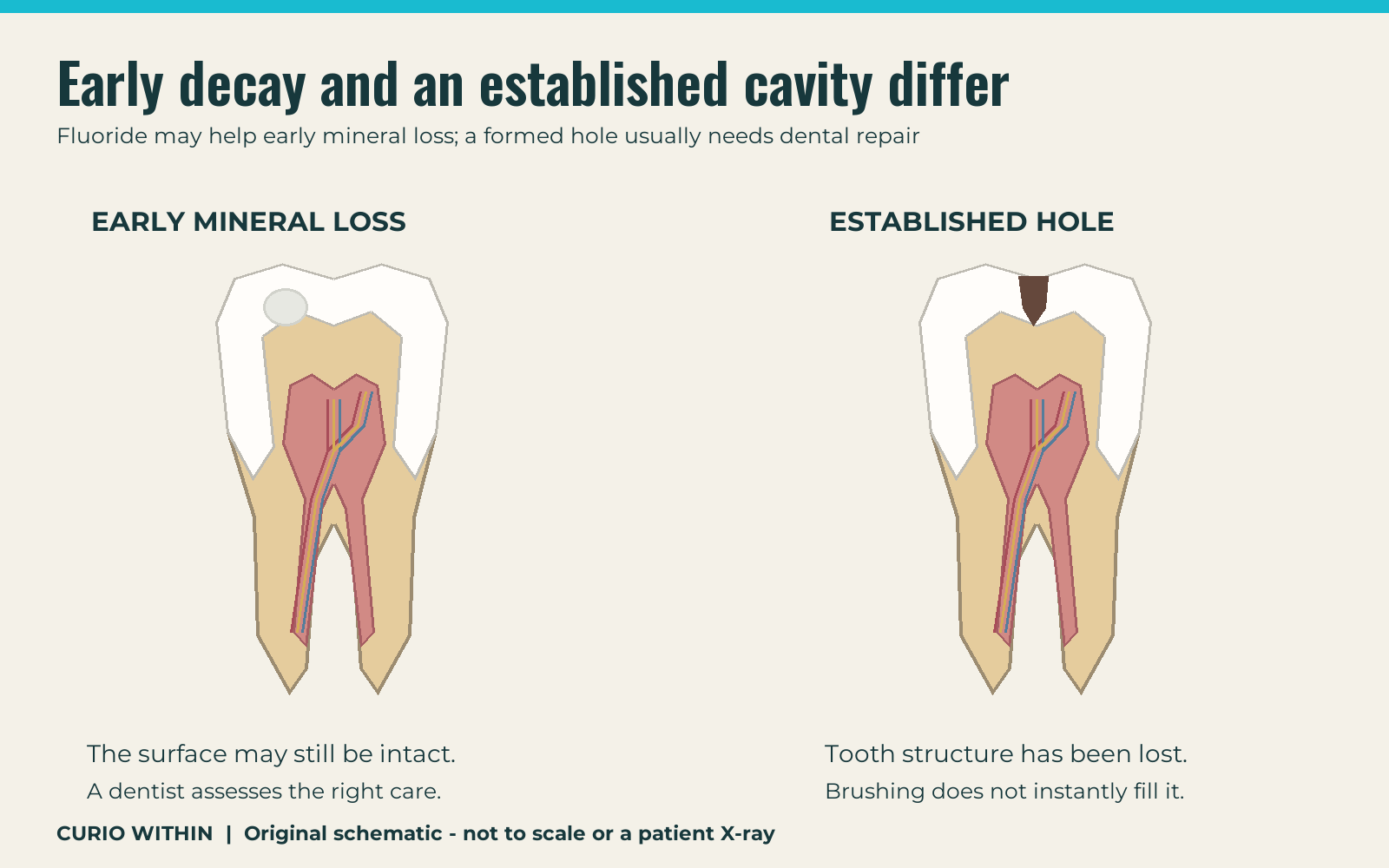
There may be no symptoms during the early stages of tooth decay. A white area can indicate mineral loss before a hole has formed. At this stage, measures involving fluoride and mineral replacement may help stop or reverse early decay. That possibility is different from regrowing a piece of tooth that has already been lost. Source: NIDCR early-decay explanation.
Why a formed hole usually needs repair
Treatment depends on the stage and extent of decay. Fluoride treatment can be used for early decay. A cavity that has become a hole usually needs a filling or another form of dental repair. If decay has involved the pulp, other treatment may be required. This does not mean that every toothache needs a root canal; the dentist determines the appropriate care after assessment. Source: NHS treatment overview.
Which symptoms need urgent help?
Tooth or facial swelling, fever, a bad taste and significant dental pain can occur with a dental abscess. Suspected abscess needs urgent dental care; it does not resolve simply because the pain is temporarily less noticeable. Difficulty breathing, speaking or swallowing, major mouth swelling, or swelling affecting an eye needs emergency assessment. Contact the appropriate local emergency service for those severe signs. Source: NHS dental-abscess guidance.
Protect teeth before pain becomes the reminder
Regular dental care can identify problems before a severe toothache develops. Brush with fluoride toothpaste and clean between teeth, and discuss how often you need check-ups with your dentist. Repeated sugary exposures matter, not just the size of one sweet snack. The aim is to prevent repeated mineral loss and catch changes early, rather than wait for a dramatic symptom. Source: CDC cavities information, NHS prevention advice.
Curio Within educational article. Sources checked 28 October 2026. General information, not an individual dental diagnosis or treatment plan. Original diagrams and footage are illustrative. No clinical review is claimed.
Keep your curiosity going
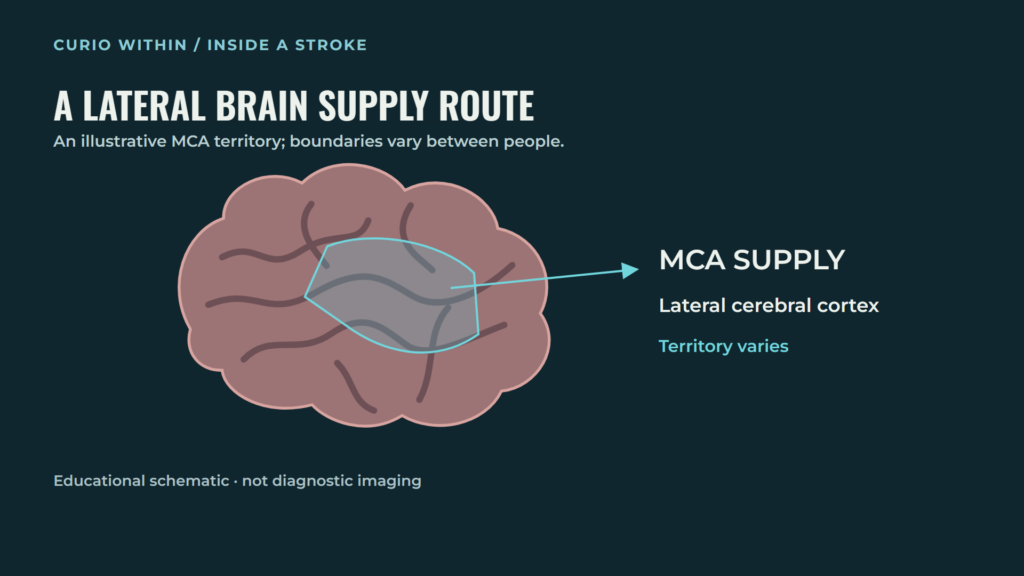
What Actually Happens Inside Your Brain During a Stroke?
One blocked artery can disrupt a brain network. Follow the chain from blood flow to neurons, then learn why possible stroke signs need emergency care.
Read the story →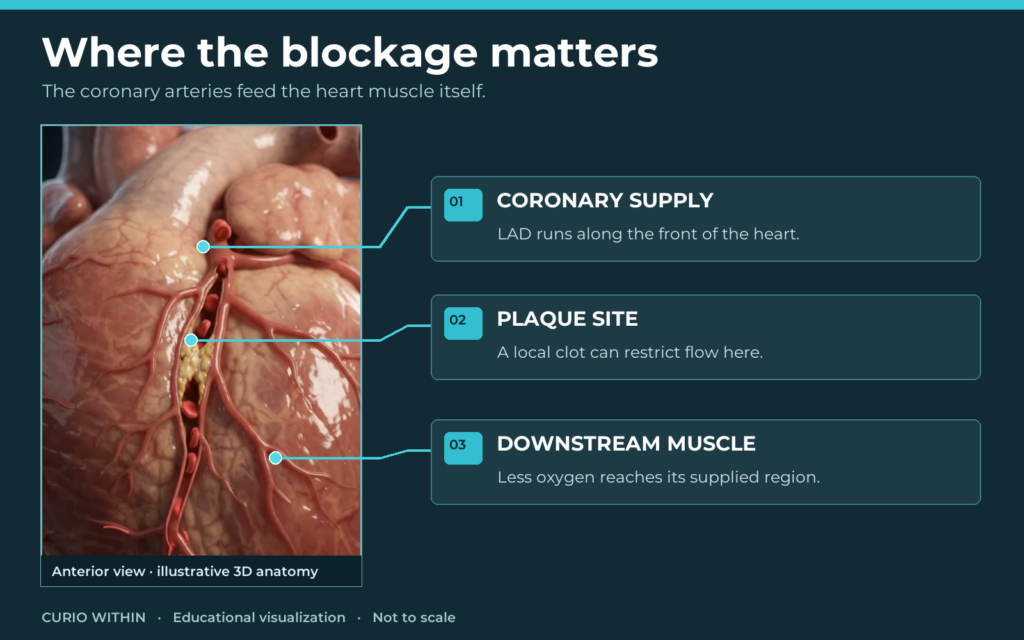
What Actually Happens Inside Your Heart During a Heart Attack?
The heart can keep beating while a blocked coronary artery deprives part of its muscle of oxygen. Follow the chain from artery to cell.
Read the story →