
For the basic mechanism, watch our short explanation of acid reflux. The guide below focuses on why nighttime symptoms can be different.
You settle into bed, then notice burning behind your breastbone or a sour taste rising towards your mouth. Nighttime reflux can make a quiet part of the day uncomfortable. Understanding it starts with the direction of flow: stomach contents are travelling backwards into the food pipe, rather than staying below it. Repeated troublesome reflux may be part of gastroesophageal reflux disease, or GERD. Source: MedlinePlus GERD overview.
Do not assume new or severe chest pain is reflux. Seek emergency help, especially if pain persists, spreads to an arm or jaw, or comes with breathlessness, sweating or feeling faint. Contact your local emergency service. Source: NHS chest-pain guidance.
A muscle barrier sits at the junction
The esophagus is the tube that carries food towards the stomach. At its lower end, a muscular region called the lower esophageal sphincter helps prevent contents coming back up. The diaphragm also contributes to this barrier. If the sphincter is weak or relaxes at an inappropriate time, stomach contents can enter the esophagus. This is not a metal valve, a hinged flap or a permanent plug; it is living muscle that normally changes its tension. Source: NIDDK symptoms and causes.
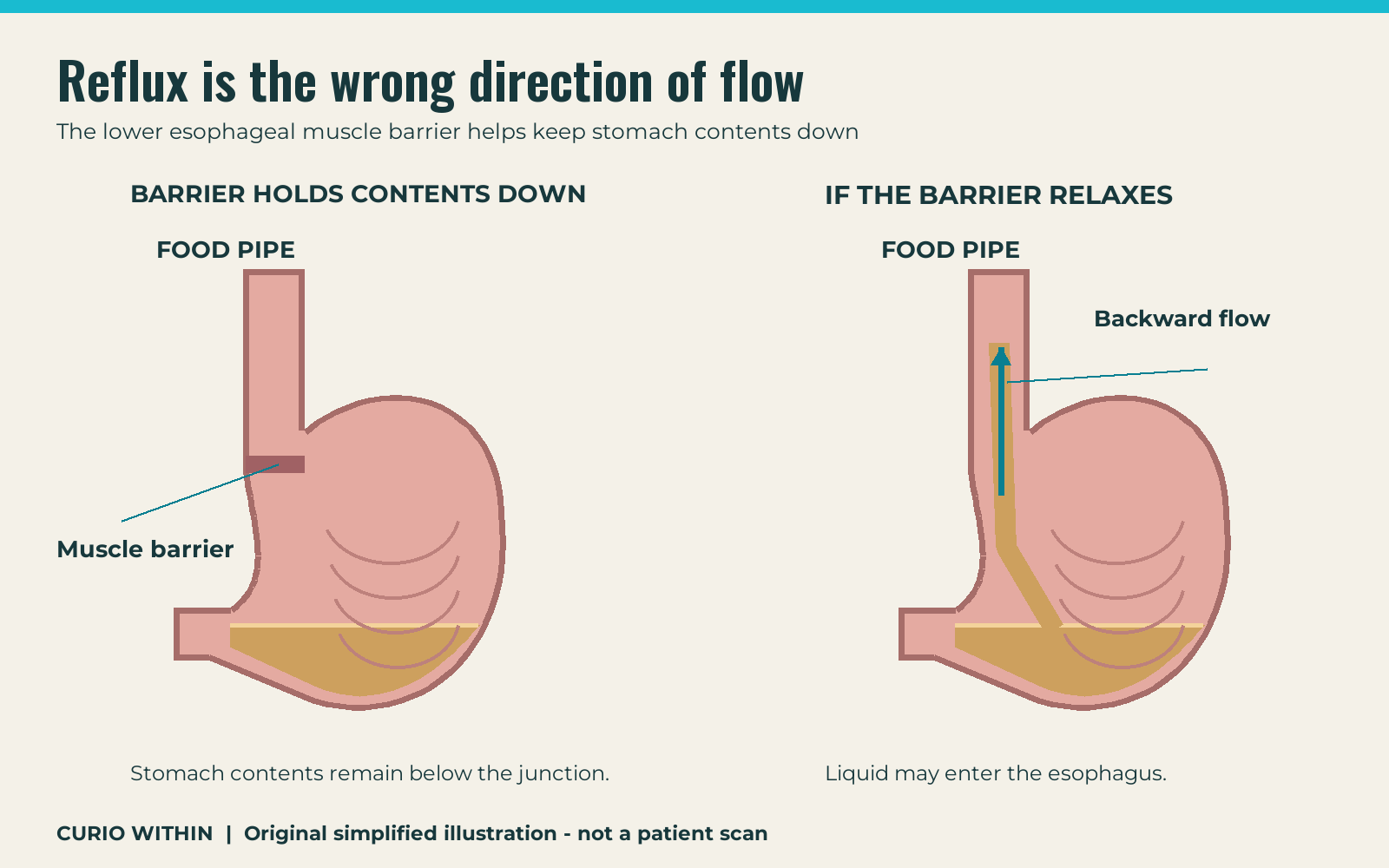
Acid is normally present in the stomach. Reflux is therefore not always explained by the stomach producing an unusually large amount. The position and function of the barrier, and where the contents travel, matter too. The diagram makes the direction of backward flow easier to follow; its colours are illustrative. Source: American College of Gastroenterology explanation.
Why lying flat can make a difference
When you are upright, gravity helps keep stomach contents below the junction. Lying flat removes some of that assistance. Symptoms can consequently be more noticeable after eating and when lying down. That does not mean everyone refluxes whenever they go to bed, or that a particular sleeping position can diagnose GERD. It explains why the same person may notice a different pattern during the night. Source: NHS reflux symptoms.
Heartburn and regurgitation are related but distinct experiences. Heartburn is the burning sensation; regurgitation is the return of stomach contents towards the throat or mouth, sometimes producing a sour taste. Some people also report cough or a hoarse voice, but those symptoms have other possible causes and should not automatically be attributed to reflux. Source: NIDDK symptom information.
Leave time between dinner and bed
For people with symptoms at night or when lying down, NIDDK suggests that finishing meals at least three hours before lying down or going to bed may improve symptoms. The three-hour interval is practical guidance, not a biological countdown: the stomach does not suddenly become empty at exactly three hours. It is a starting point to discuss and adapt to your routine. Source: NIDDK eating and nutrition guidance.
Food triggers are individual. If a particular food or drink repeatedly makes symptoms worse, discuss it with a clinician rather than assuming everybody needs the same restrictive diet. Avoiding late meals does not replace assessment when symptoms are persistent or concerning. Source: NIDDK guidance on symptom triggers.
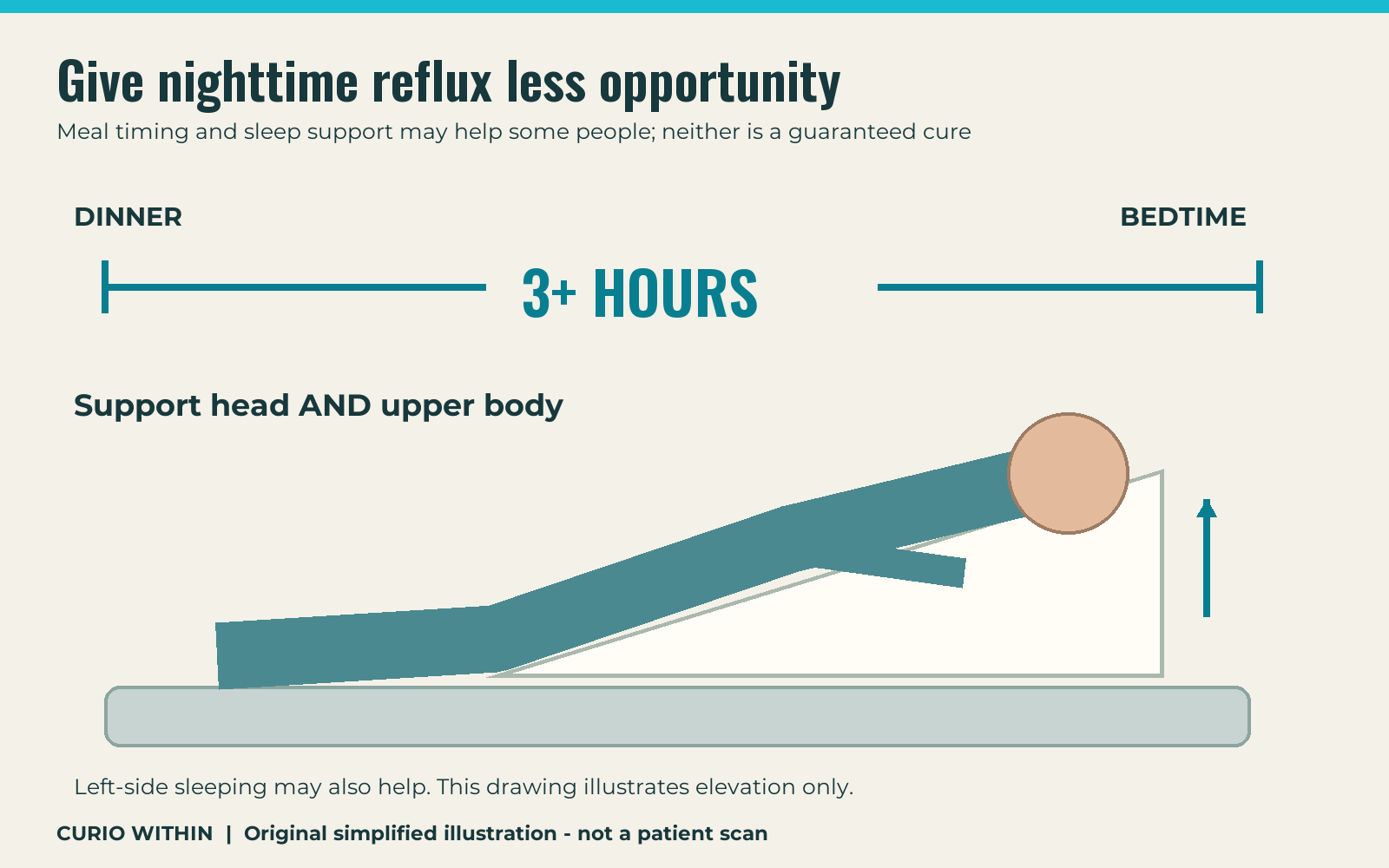
Support the upper body, not just the neck
Raising the head and upper body during sleep may reduce nighttime reflux. A suitable wedge or an appropriately raised bed head can create an incline. The practical aim is support for the upper body, rather than simply bending the neck forward on a tall stack of pillows. Choose a stable arrangement that is comfortable and appropriate for your health and mobility. Source: NIDDK treatment information.
Sleeping on your left side can also help some people. It is an option rather than a requirement for everyone, particularly if another medical condition limits your sleeping position. Changes to meal timing and position can be part of management, but persistent symptoms may need additional treatment. Source: MedlinePlus lifestyle measures.
When to get assessed
Frequent or troublesome symptoms deserve a medical discussion. Trouble swallowing, pain when swallowing, persistent vomiting, unexplained weight loss, or evidence of digestive bleeding also needs assessment. Chest pain should not be labelled reflux before serious causes have been considered. Source: NIDDK advice on seeing a doctor.
A clinician may be able to make an initial assessment from symptoms and medical history. Tests are selected when needed rather than automatically required for every episode. Depending on the situation, these can include an upper endoscopy or monitoring reflux in the esophagus. This article does not establish which test or treatment an individual needs. Source: NIDDK diagnosis information.
Medicines can be appropriate, but do not change a prescribed medicine or rely on repeated self-treatment for severe symptoms without advice. The mechanism to remember is simple: a barrier can allow backward flow, and lying flat changes gravity’s help. The next step depends on the pattern and severity of your symptoms. Source: NIDDK treatment information.
Curio Within educational article. Sources checked 28 October 2026. General information, not an individual diagnosis or treatment plan. Diagrams are original simplified illustrations. No clinical review is claimed.
Keep your curiosity going
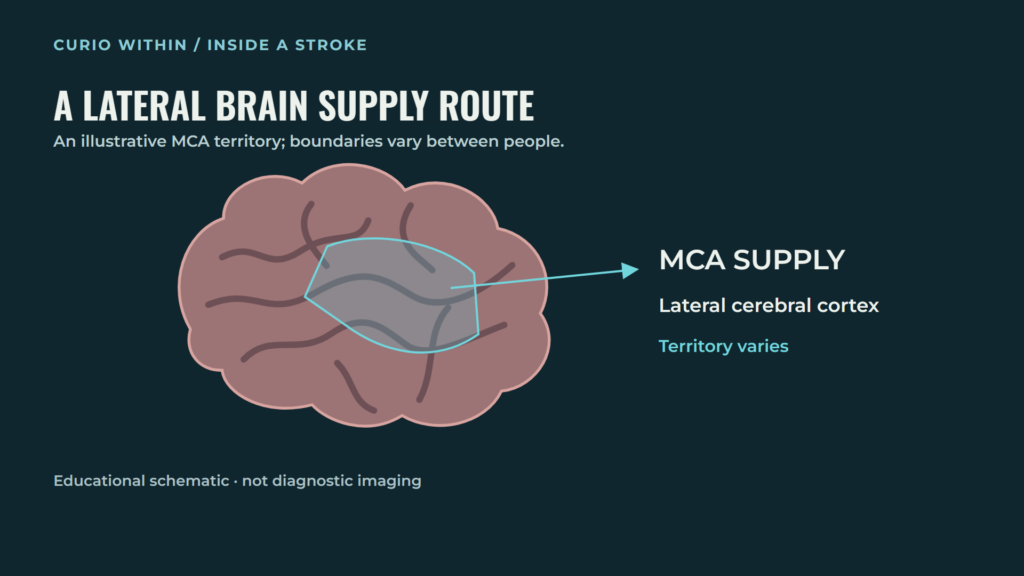
What Actually Happens Inside Your Brain During a Stroke?
One blocked artery can disrupt a brain network. Follow the chain from blood flow to neurons, then learn why possible stroke signs need emergency care.
Read the story →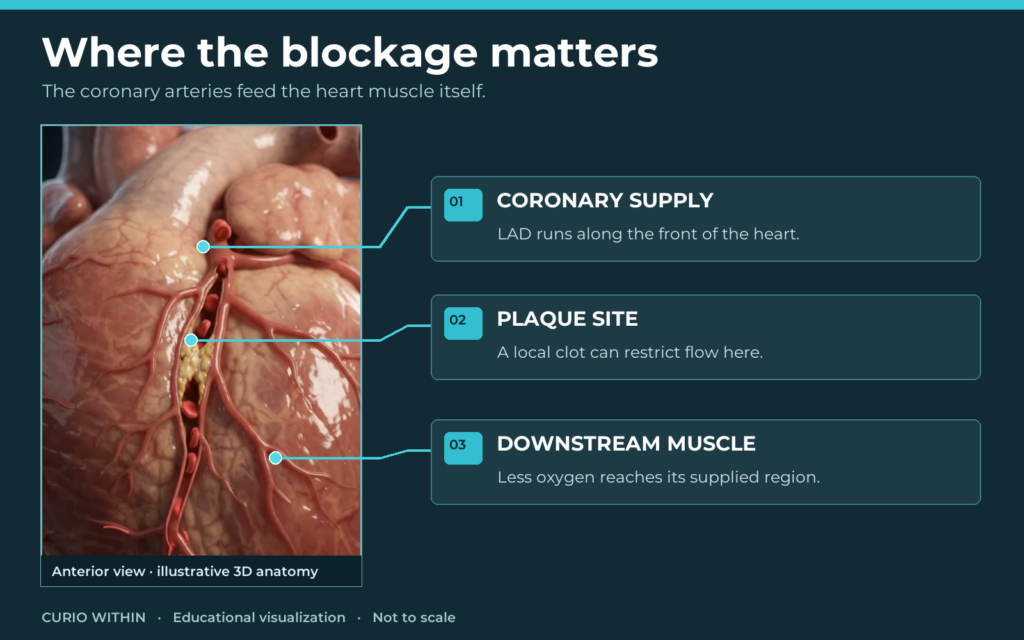
What Actually Happens Inside Your Heart During a Heart Attack?
The heart can keep beating while a blocked coronary artery deprives part of its muscle of oxygen. Follow the chain from artery to cell.
Read the story →