
Feeling tired after a decent night’s sleep can be frustrating. Iron deficiency is one possible explanation, but it is not the only one. The useful question is not simply “Do I need more iron?” It is whether iron is affecting your blood—and what caused the problem in the first place.
Watch the 46-second explanation
What iron has to do with oxygen
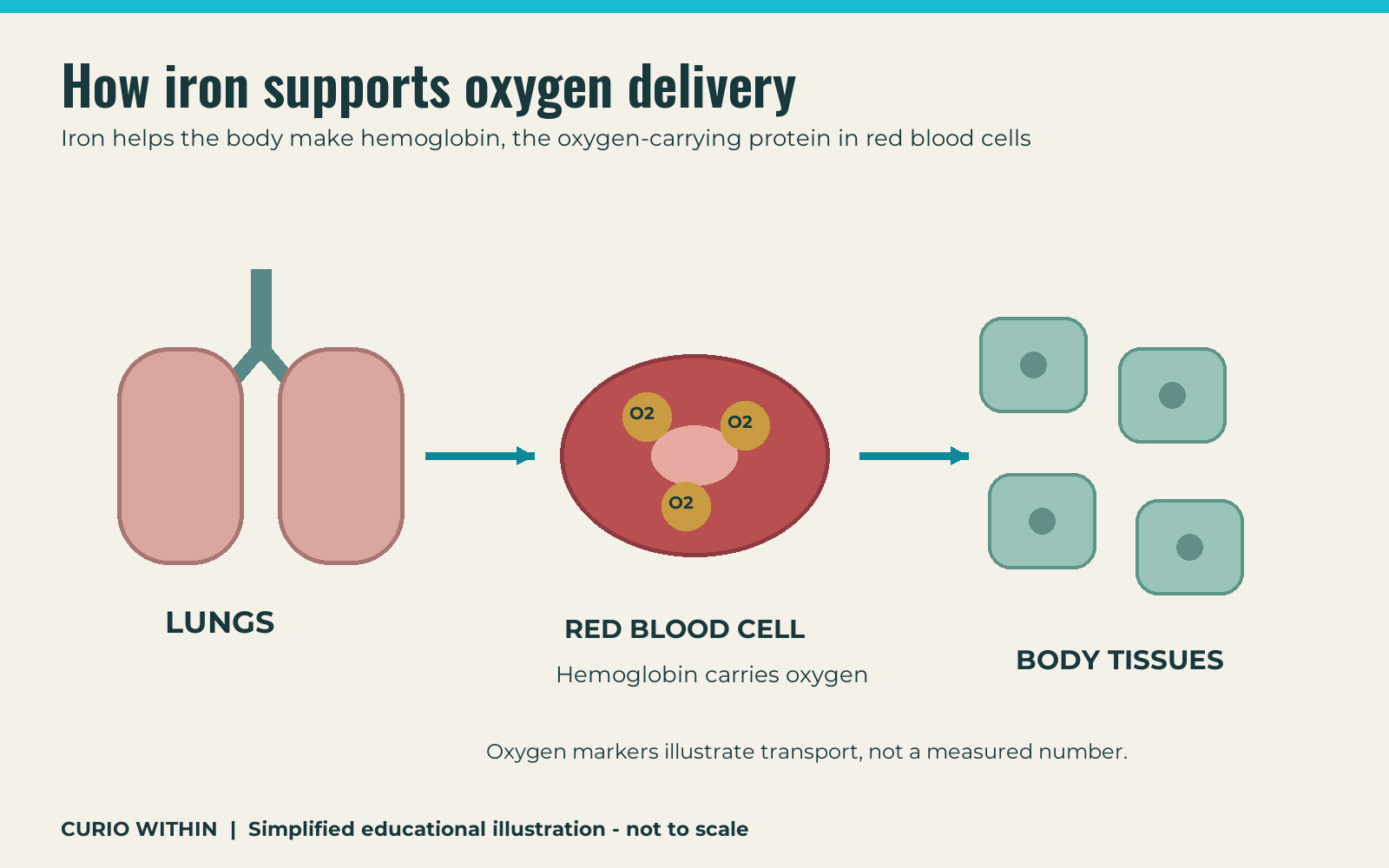
Red blood cells carry oxygen from your lungs to the rest of your body. Inside them is hemoglobin, the protein that performs this carrying job. Your body needs iron to make hemoglobin. Iron is therefore part of an oxygen-delivery system, rather than an instant burst of energy like a switch being turned on. The NIH Office of Dietary Supplements explains iron’s role.
Low iron and anemia are related, but not identical
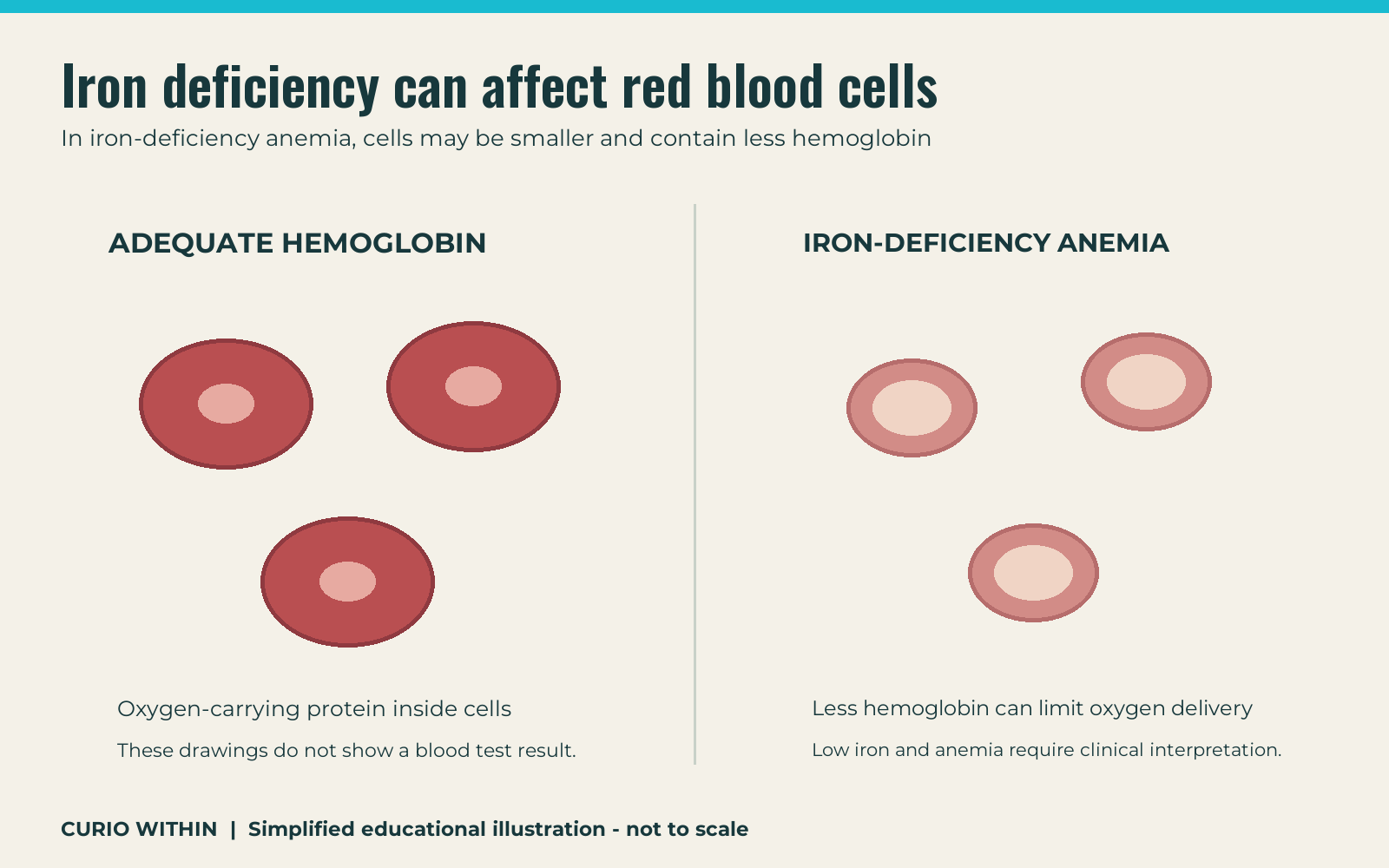
If too little iron is available over time, iron-deficiency anemia can develop. Red blood cells may become smaller and contain less hemoglobin, so the blood carries less oxygen. This does not mean that missing one iron-rich meal immediately changes every blood cell. The microscopic sequence in the film compresses an idea into seconds; it does not show the real timescale. Source: NIH iron fact sheet.
There are also other kinds of anemia, including anemia related to vitamin B12 deficiency or red-cell breakdown. A low hemoglobin result needs an explanation; “anemia” is not automatically another name for iron deficiency. NHLBI describes the different types.
What symptoms can occur?
Iron-deficiency anemia can cause tiredness, a lack of energy, breathlessness, noticeable heartbeats or paler-than-usual skin. These experiences are clues to discuss, not a diagnosis that can be made from a short video or a person’s appearance. If you think you may have the condition, arrange an assessment rather than guessing from a single symptom. Source: NHS symptom and assessment guidance.
The cause matters as much as the result
Iron can be lost through bleeding, including heavy menstrual periods or bleeding in the digestive tract. Some people have difficulty absorbing iron, while others do not get enough to meet their needs. Pregnancy can increase requirements. These possibilities need different follow-up questions: what you eat is relevant, but diet is not the only explanation a clinician considers. NHLBI explains the causes of iron-deficiency anemia.
What do a blood count and ferritin tell you?
A complete blood count, or CBC, includes measurements such as hemoglobin and red-cell size. It helps establish whether anemia is present and gives clues about its type. It does not replace a history, examination or further investigation when needed. Read NHLBI’s diagnostic overview.
Ferritin is a protein that stores iron. A ferritin blood test helps a clinician assess the body’s iron stores. Results need context: inflammation and some other conditions can raise ferritin, so an isolated number should not be used as a do-it-yourself treatment instruction. Ask what the results mean together and whether the cause has been identified. MedlinePlus explains ferritin testing and interpretation.
Why not start high-dose iron just in case?
More iron is not automatically better. High doses can cause problems such as nausea, constipation or abdominal pain, and excessive iron can be harmful. Supplements can also interact with medicines. If treatment is needed, the type, dose and follow-up should fit the diagnosis and the person taking it. Keep iron products out of children’s reach. Source: NIH supplement guidance.
Where food fits into the picture
Iron-containing foods include meat, seafood, beans, lentils, leafy vegetables and fortified cereals. A balanced diet may help, but the treatment of confirmed iron-deficiency anemia may also involve prescribed iron and addressing the underlying cause. Do not assume that adding one food will correct every case or resolve ongoing blood loss. The NHS explains food and treatment together.
When symptoms need immediate help
Do not put severe breathing difficulty or a tight, heavy chest down to low iron. Seek emergency help using your local emergency service, particularly if you cannot speak normally because of breathlessness or suddenly become confused. These symptoms need assessment for their actual cause. Source: NHS emergency breathing guidance.
The takeaway: iron supports oxygen delivery through hemoglobin. Tiredness alone cannot tell you whether iron is the problem. Check the blood, investigate the cause and treat the confirmed deficiency.
Written by Curio Within. Sources checked 28 October 2026. General education, not individual medical advice. Medical illustrations are simplified. No independent clinical review is claimed. Editorial policy · Corrections.
Keep your curiosity going
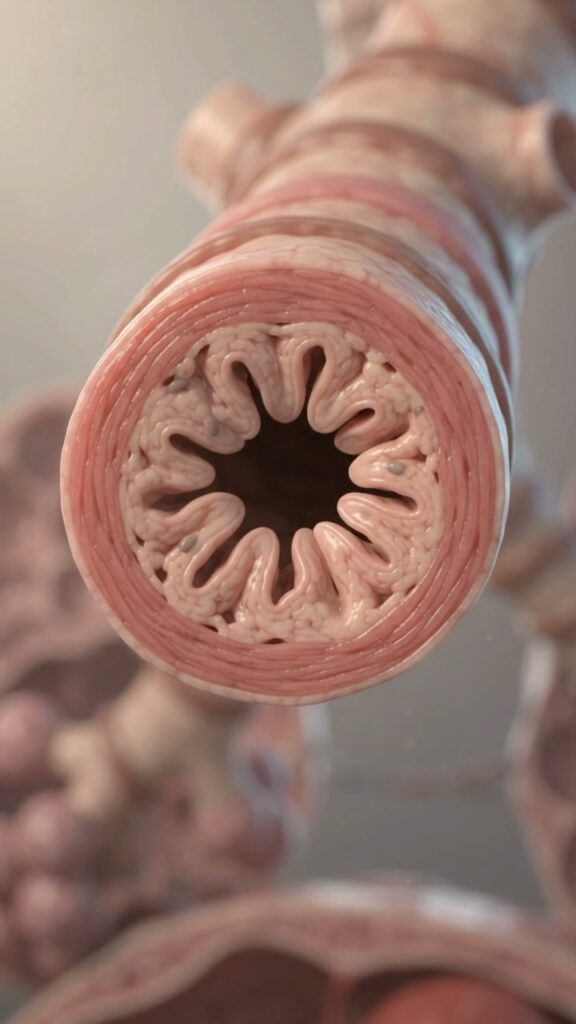
Why Asthma Makes Breathing Hard: Inside a Narrowing Airway
See how tight airway muscles, swelling and extra mucus can make breathing harder during asthma, and learn when symptoms need emergency care.
Read the story →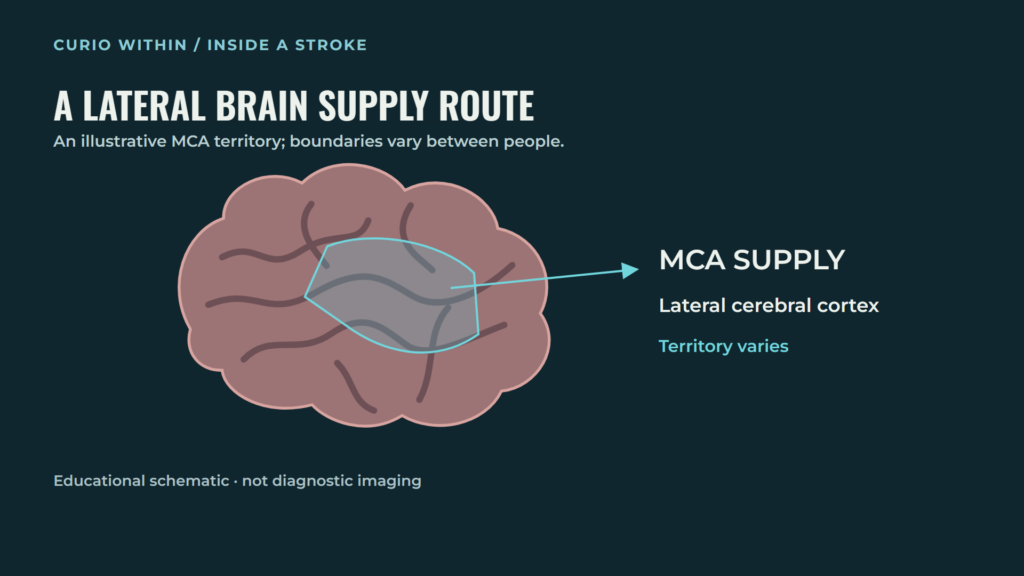
What Actually Happens Inside Your Brain During a Stroke?
One blocked artery can disrupt a brain network. Follow the chain from blood flow to neurons, then learn why possible stroke signs need emergency care.
Read the story →