
Clean teeth do not rule out every source of bad breath. One possible source sits farther back in the mouth: material trapped in the small pockets of the tonsils. That material can harden into a tonsil stone. The useful distinction is between a small lump inside a crypt and the many other reasons a throat can look white or feel sore. An animation can explain the mechanism, but it cannot diagnose a white patch.
Watch the 49-second explanation
First, find the tonsils
The palatine tonsils are soft tissues on either side at the back of the throat. Their surface has small pockets or folds called crypts. These spaces can retain food particles, dead cells and bacteria. The material may gradually harden into a small lump. A tonsil stone is also called a tonsillolith. Source: Healthdirect.
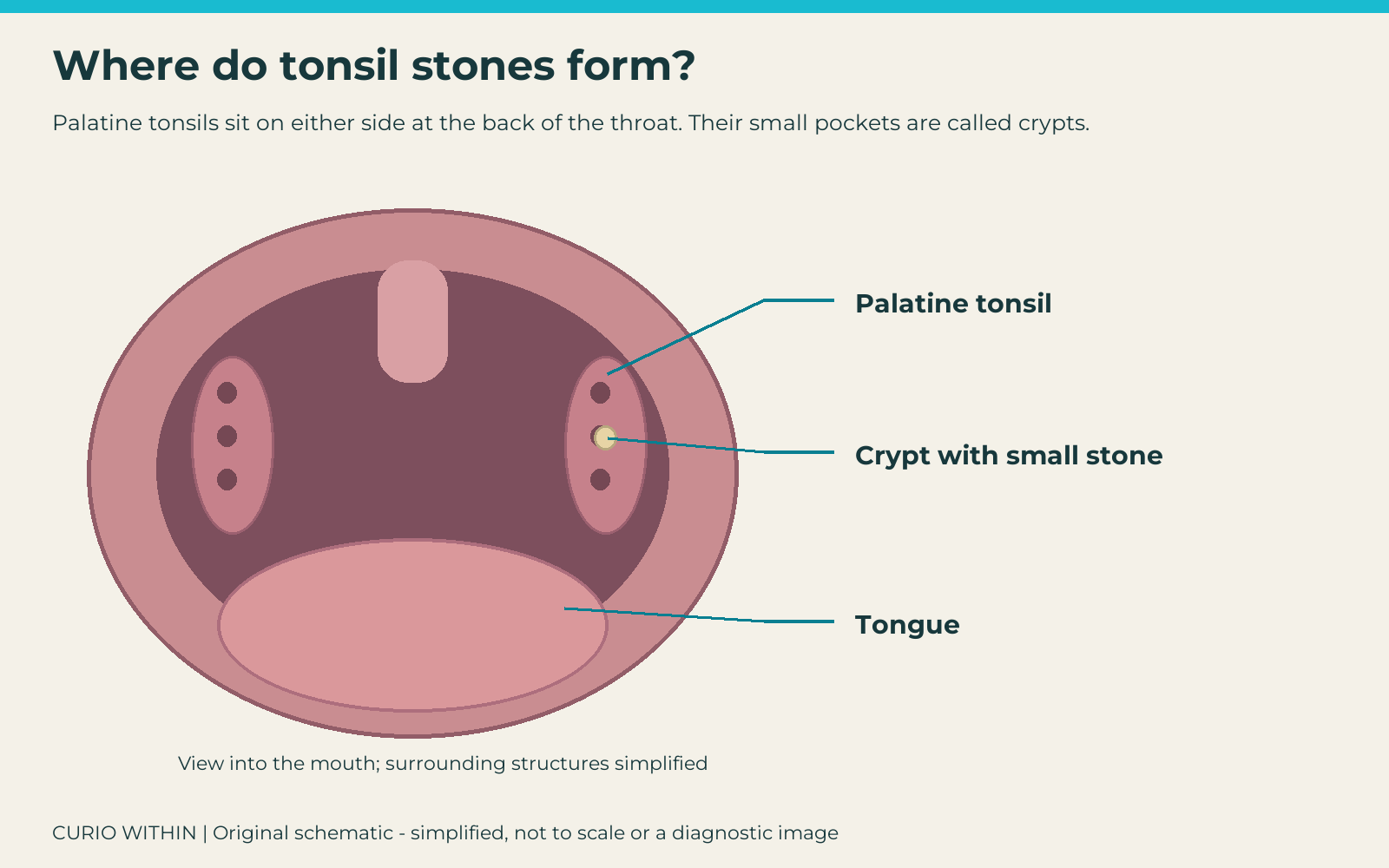
This original diagram locates the tonsils. It is simplified and is not a diagnostic image of an individual throat.
A stone may look white or yellow and can be partly hidden in a crypt rather than sitting fully on the surface. Some are found during an examination even when they have caused no noticeable symptoms. Its colour alone does not establish what a white area represents. Source: Cleveland Clinic.
How trapped material becomes a stone
Tonsil stones are collections of calcified material associated with cellular debris, food and microorganisms in tonsillar recesses. The film enlarges the crypt and compresses the explanation into seconds. It does not show a measured growth rate, imply that every pocket will form a stone, or suggest that a large lump appears immediately after a meal. The exact development mechanism is not completely understood. Source: American Family Physician.
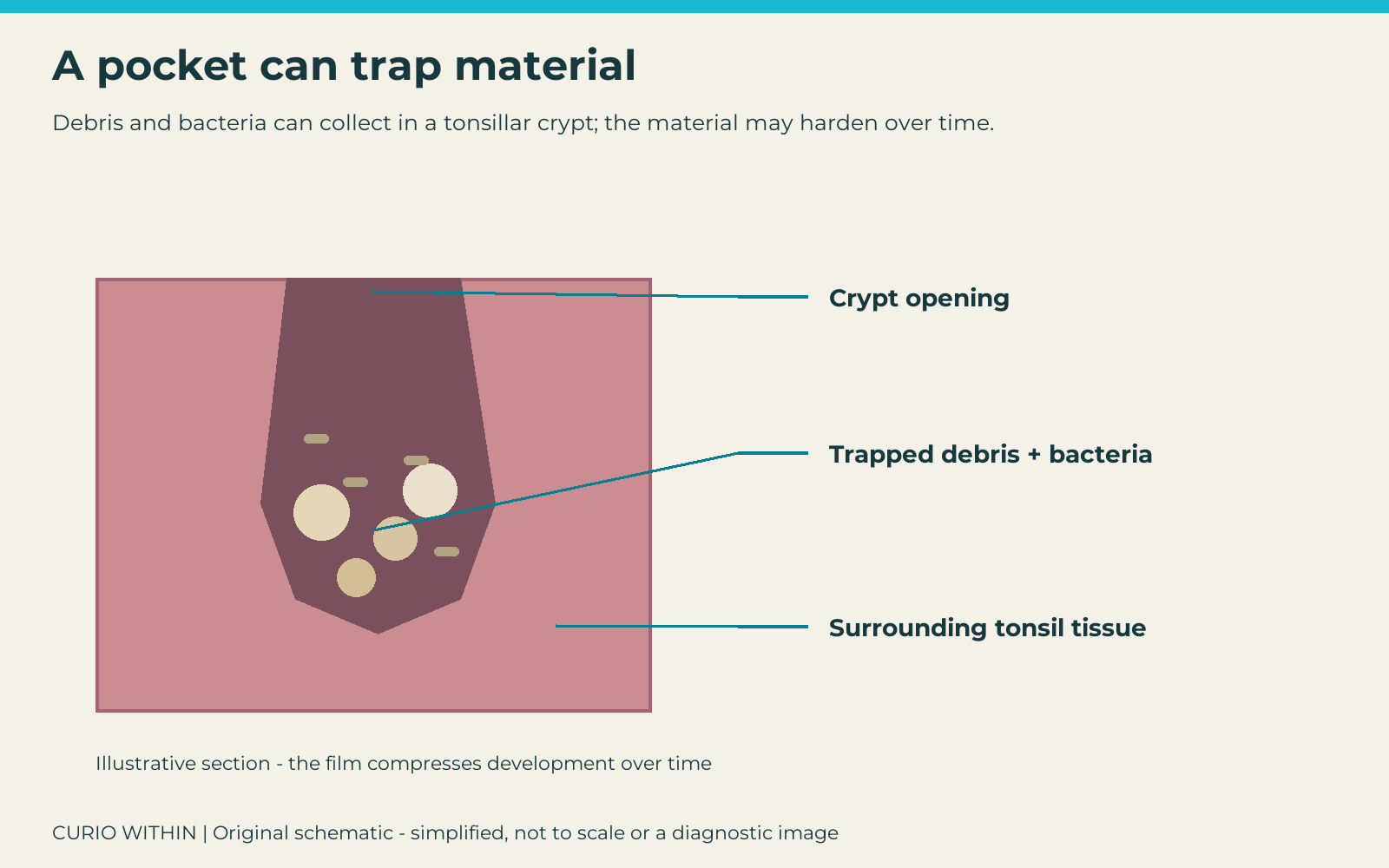
An illustrative section through a pocket. The particles, colours and proportions are enlarged or simplified to explain their relationship.
Why can breath smell unpleasant?
Bacteria and retained material in the crypt can be associated with a foul smell. Some people notice bad breath, an unpleasant taste, throat irritation or a feeling that something is stuck. Others have no symptoms. These are possible associations, not a checklist that proves the presence of a stone. Source: NHS Greater Glasgow and Clyde.
Bad breath can also come from dental or gum problems, dry mouth, smoking, strong-smelling foods and other conditions. Keep dental causes in mind instead of assuming the tonsils explain everything. Persistent bad breath despite a few weeks of good self-care, toothache or painful and bleeding gums deserves a dental check. Source: NHS bad breath.
A tonsil stone is not the same as tonsillitis
Tonsillitis refers to inflammation of the tonsils and is commonly linked to infection. It can involve a painful throat, fever and white or yellow patches. A solid lump in a crypt and an inflamed tonsil are different findings, even though someone can have more than one problem. Do not decide that a white patch is harmless just because you have seen a tonsil-stone video. Source: NHS tonsillitis.
Gentle care, rather than digging
Small stones often cause little trouble and may come away on their own. Good mouth care, hydration and gentle saltwater gargling may help. These steps are not a guarantee against recurrence and should not be presented as an instant cure. If stones repeatedly bother you or symptoms do not improve, a clinician can examine the throat and discuss appropriate options. Source: Healthdirect.
Avoid digging into tonsil tissue with fingers, sharp objects or improvised tools. NHS Devon also advises against water-jet irrigation and manual removal because of risks including tissue damage, bleeding, infection and inhaling a foreign object. This article does not teach an extraction technique. Source: MyHealth Devon.
When to get help
Ongoing pain, fever or swallowing difficulties should be assessed rather than automatically blamed on a stone. Seek emergency care for trouble breathing, inability to swallow, swelling inside the mouth or throat, or a severe sore throat that rapidly worsens. These can indicate a more serious throat problem. Contact local emergency services or attend an emergency department; do not wait for a routine appointment. Source: NHS tonsillitis.
The point to remember
A tonsillar crypt is a small pocket where retained material can harden. That helps explain one possible source of bad breath. The appearance of a throat, the symptoms and the examination still matter more than matching yourself to an online image.
Educational information only. No independent clinician review has been performed for this Curio Within article. It does not replace medical assessment. Sources checked 28 October 2026.
Keep your curiosity going

What Actually Happens Inside Your Brain During a Stroke?
One blocked artery can disrupt a brain network. Follow the chain from blood flow to neurons, then learn why possible stroke signs need emergency care.
Read the story →
What Actually Happens Inside Your Heart During a Heart Attack?
The heart can keep beating while a blocked coronary artery deprives part of its muscle of oxygen. Follow the chain from artery to cell.
Read the story →